
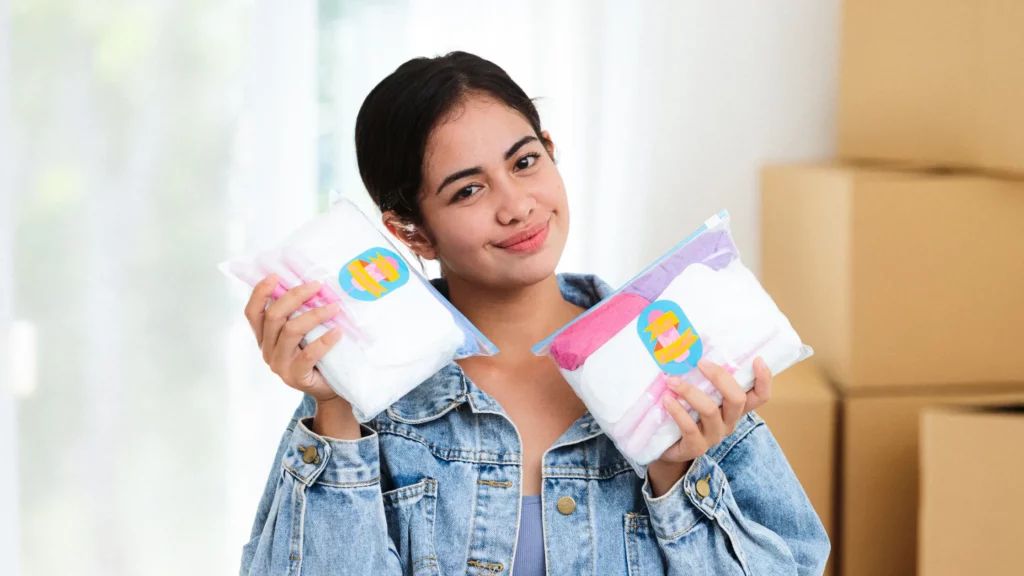
Disposable menstrual products are used by billions of people, but they generate an enormous amount of waste every year. Conventional pads and tampons often contain plastic, synthetic fibers, and chemical additives that take hundreds of years to break down. Fortunately, more and more plastic‑free and reusable options now offer a more sustainable, healthier, and more economical alternative.
This article explores how switching to reusable menstrual products can significantly reduce waste, protect the environment, and support a more responsible lifestyle.
1. The environmental impact of disposable menstrual products
Most disposable pads contain up to 90% plastic. Tampons often include plastic applicators and synthetic fibers. Over a lifetime, a person may use between 10,000 and 15,000 disposable menstrual products.
These products end up in landfills, oceans, and waterways, contributing to long‑lasting pollution. Since plastic takes centuries to degrade, every pad or tampon ever used still exists somewhere on the planet.
Switching to zero‑waste menstrual solutions is one of the simplest ways to reduce your ecological footprint.
2. Why choose plastic‑free and reusable menstrual products?
a. They significantly reduce waste
Reusable products such as menstrual cups, washable pads, and period underwear can last 5 to 10 years, replacing thousands of disposable products.
b. They are better for your health
Plastic‑free products avoid fragrances, chlorine, and synthetic fibers that can irritate the skin.
c. They save money
Even though the initial investment is higher, reusable products drastically reduce monthly expenses.
d. They support a sustainable lifestyle
Choosing reusable menstrual products aligns with eco‑friendly habits and conscious consumption.
3. The best reusable and plastic‑free menstrual options
1. The menstrual cup
The menstrual cup is a small medical‑grade silicone container inserted into the vagina to collect menstrual flow. It can be worn for up to 12 hours and reused for several years.
Benefits:
- Zero waste
- Economical
- Long‑lasting
- Comfortable for many users
2. Washable menstrual pads
Made from cotton, bamboo, or hemp, they are washable and available in several absorbency levels.
Benefits:
- Soft and breathable
- Plastic‑free and chemical‑free
- Very long lifespan
3. Period underwear
They absorb menstrual flow directly and can be washed and reused.
Benefits:
- Easy to use
- Comfortable
- Ideal for teenagers or beginners
4. Organic cotton tampons and pads
For those not ready to switch to reusables, organic cotton products offer a plastic‑free alternative.
Benefits:
- Biodegradable
- Chemical‑free
- Suitable for sensitive skin
4. How to transition to reusable menstrual products
Changing habits can feel overwhelming, but the transition can be simple.
Start gradually
Try just one product first, such as a menstrual cup or period underwear.
Combine different options
Many people use a combination depending on their flow, comfort, or activities.
Learn proper care
Reusable products require washing or sterilizing, but the routine quickly becomes natural.
Know your cycle
Understanding your flow helps you choose the right absorbency and type of protection.
5. Breaking the taboos around sustainable menstruation
Cultural taboos often prevent open conversations about periods. Promoting sustainable menstrual education helps normalize eco‑friendly choices and empowers people to make informed decisions.
Schools, workplaces, and communities can contribute by offering workshops, providing reusable products, and encouraging dialogue.
6. Long‑term benefits of sustainable menstrual products
Switching to reusable menstrual products has long‑lasting positive effects:
- Less plastic pollution
- Lower carbon footprint
- Reduced landfill waste
- Better intimate health
- Lower long‑term costs
- More autonomy and responsible choices
Even a small change — like replacing one disposable product with a reusable one — can make a big difference.
Conclusion
Reducing menstrual waste is an essential step toward a more sustainable future. By choosing plastic‑free and reusable products, everyone can protect the environment, save money, and adopt a healthier lifestyle. Sustainable menstruation is not a trend — it is a powerful movement for the planet and for menstrual equity.